

Farzhana Naek leads Pakistani delegation in calling for locally led adaptation, stronger early warning systems and nature-based solutions to protect vulnerable communities from climate disasters
By Abida Khan
Editor-in-Chief
ISLAMABAD: The Pakistan Red Crescent Society (PRCS) has urged the international community to translate climate commitments into concrete action by prioritising locally led adaptation, effective early warning systems, nature-based solutions and accessible climate financing to protect vulnerable communities from increasingly devastating floods, heatwaves and droughts.
A high-level PRCS delegation, led by Chairperson Farzhana Naek and supported by the German Red Cross, highlighted Pakistan’s growing climate challenges at the 31st United Nations Climate Change Conference (COP31) in Antalya, Türkiye, emphasising the disproportionate impact of climate-related disasters on vulnerable populations.
The delegation underscored how recurring climate emergencies were destroying homes, livelihoods and years of development gains across Pakistan, with the poorest communities suffering the most despite contributing least to the global climate crisis.
Farzhana Naek said climate change was no longer a distant threat for Pakistan but a daily reality affecting millions of families.
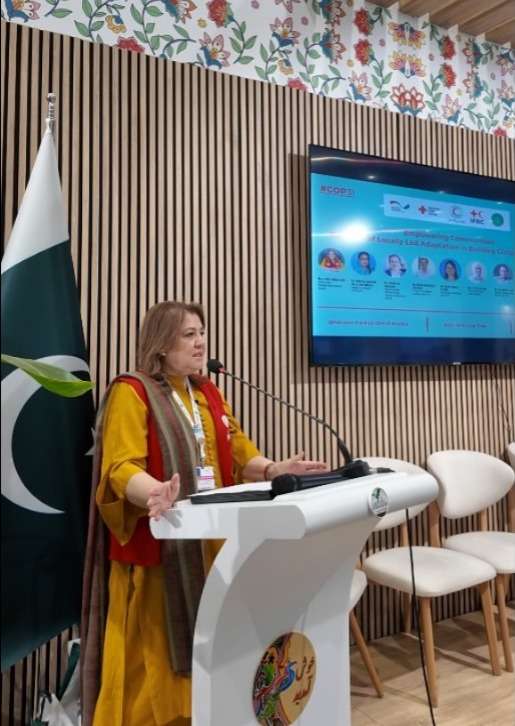
“Floods wash away homes and livelihoods, heatwaves and droughts push families to the edge, and every disaster sets back years of progress,” she said.
She stressed that empowering communities with timely information, effective early warnings and the capacity to lead disaster response was essential to saving lives and protecting livelihoods.
Naek emphasised that locally led adaptation, nature-based solutions, early warning systems and disaster preparedness must become central pillars of climate policies rather than optional interventions.
She reaffirmed PRCS’s continued engagement with vulnerable communities before, during and after disasters through its nationwide network of volunteers, particularly in areas most exposed to climate risks.
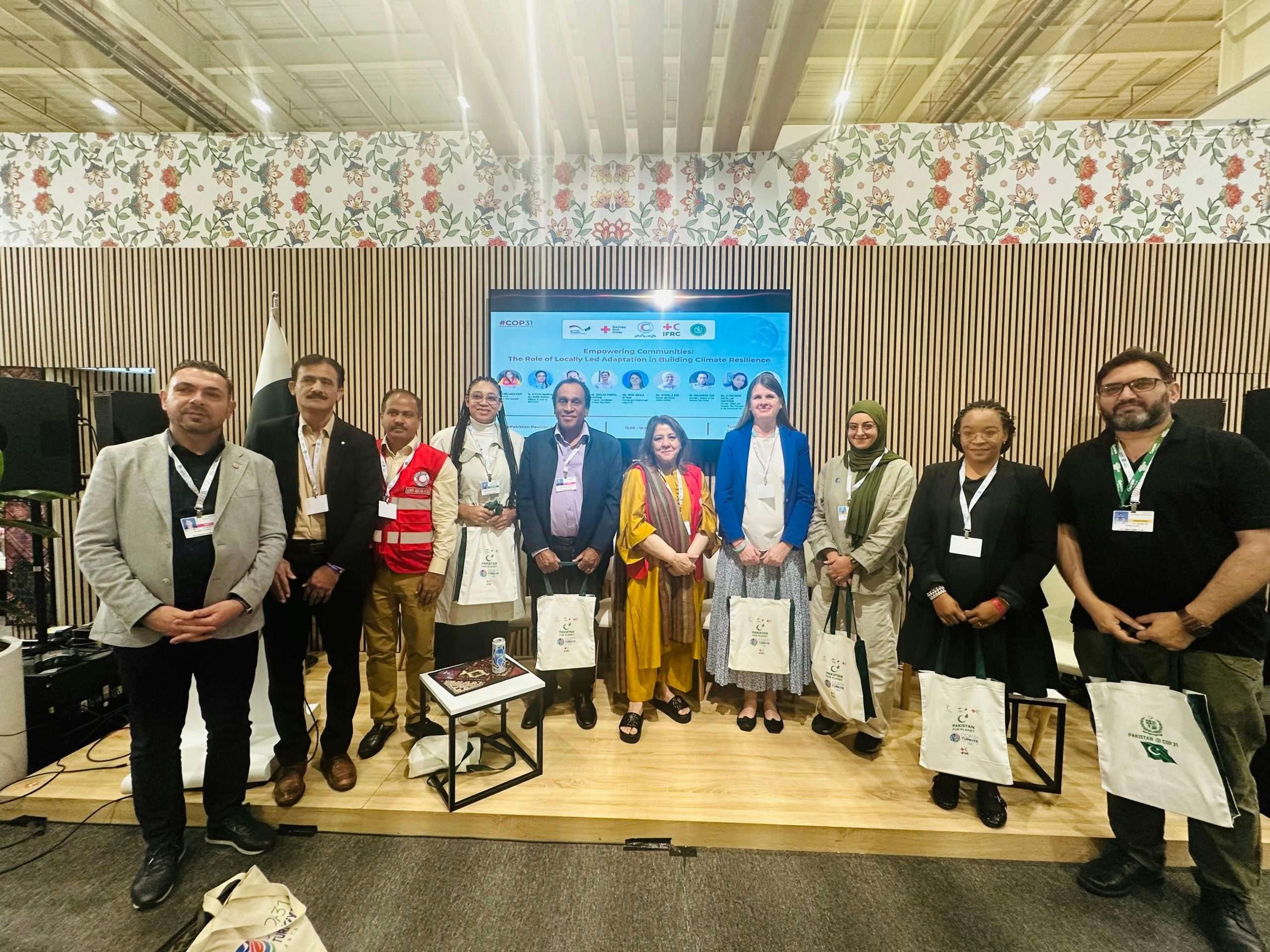
As part of its engagement at COP31, PRCS hosted a flagship session at the Pakistan Pavilion titled “Empowering Communities: The Role of Locally Led Adaptation in Building Climate Resilience.”
The session brought together representatives of the International Federation of Red Cross and Red Crescent Societies (IFRC), Vanuatu Red Cross, Dominican Red Cross, German Red Cross, PRCS and climate justice advocates to discuss community-centred approaches to strengthening climate resilience.
Coordinator to the Prime Minister on Climate Change Romina Khurshid Alam called for translating international climate commitments into tangible action, emphasising that vulnerable communities needed greater access to climate finance, technical assistance and inclusive adaptation opportunities to safeguard their lives, homes and livelihoods.
At an IFRC side event titled “Scaling Up Asia-Pacific Climate Resilience,” PRCS Deputy Director for Climate Change Adaptation Sajjad Ali Kandhir highlighted the importance of predictable, sustainable and accessible climate financing.
He called for increased support for community-led adaptation, anticipatory action, strengthening local capacities and promoting nature-based solutions to address the growing climate crisis.
During an IFRC panel discussion on loss and damage, German Red Cross representative Ghulam Rasool Farooqui highlighted the devastating yet frequently overlooked human cost of climate-related disasters.
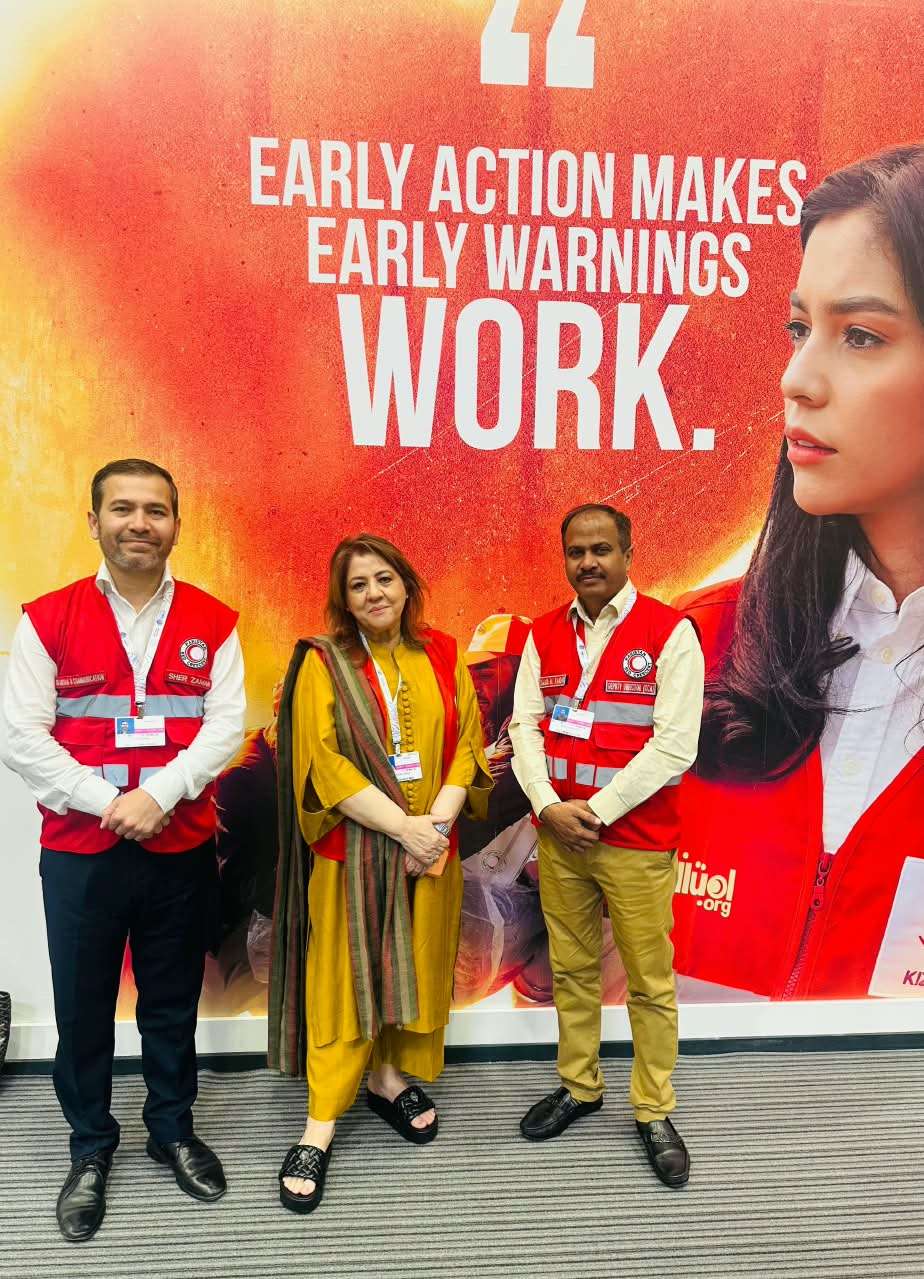
Sajjad Ali Kandhir and PRCS Head of Media and Communications Sher Zaman also attended the session.
On the sidelines of COP31, Naek held meetings with the IFRC and partner National Societies, including those of Norway, Germany, Japan, Australia and Finland, as well as Türk Kızılay and representatives of African National Societies.
The discussions focused on strengthening international partnerships, expanding cooperation on climate resilience and enhancing humanitarian action to support communities facing growing climate-related risks.
The PRCS engagement at COP31 reinforced Pakistan’s call for a more inclusive and community-driven approach to climate action, recognising that vulnerable populations must be placed at the centre of adaptation policies and humanitarian planning.
The organisation stressed that empowering local communities, strengthening international partnerships and ensuring that climate financing reaches those most in need were essential to building a climate-resilient Pakistan and protecting future generations from the escalating impacts of climate change.



